
Cyber Security
AI Governance on the Fast Adoption Train?
While security teams draft policies, users are already uploading data

Editorial
But built it one family car at a time
In reality, many are already spending that kind of money. They're just spending it across the equivalent of several family cars. None of those cars is bad as each solves a problem, but together they're more expensive to run, harder to maintain and rarely deliver the performance of a single, well-engineered machine.
Over the past five years, organisations haven't deliberately built complex security environments, the business built them. Hybrid working demanded secure remote access. Cloud adoption introduced new security controls, SaaS applications multiplied, AI arrived almost overnight, and Shadow IT accelerated. Each new challenge was met with another product, another vendor and another contract.
According to Cybercrime Magazine, global cybersecurity spending is expected to exceed $520 billion in 2026, more than double what organisations spent just five years ago. Yet despite record investment, security teams aren't necessarily more secure because most of that additional spend isn't buying better protection; it's funding more complexity.
Security teams didn't create today's technology estates; the business did. Employees wanted to work from anywhere, and departments adopted cloud applications independently. Then AI became part of everyday work almost overnight, and business leaders demanded even faster digital transformation. And security? Well, they inherited the responsibility of protecting it all.
That has left many organisations managing dozens of overlapping security products, multiple consoles, duplicate capabilities and increasing operational overhead. The challenge is no longer just stopping attacks. It's maintaining visibility, consistency and control across an estate that continues to expand.
For many organisations - particularly mid-market businesses - the additional budget has simply helped them stand still. Teams are expected to secure more users, more devices, more applications and more data than ever before, often without significant increases in people or resources.
With IBM estimating the average cost of a data breach at around $4.4 million, expectations continue to rise while operational pressure intensifies. The result is familiar to many security leaders:
The answer isn't replacing everything, nor is it assuming yesterday's collection of point products can solve tomorrow's challenges. Best-in-class security is about achieving the strongest possible security outcomes from the investment you already make.
That starts by understanding where technologies overlap, where vendors duplicate capabilities, where operational effort is being wasted and where consolidation can simplify management without compromising protection. Often, organisations discover they're already spending enough to justify enterprise-grade security. They're simply spending it inefficiently.
Understanding where your security stack overlaps, what it costs to operate and where efficiencies can be created is the first step towards building a modern, best-in-class security strategy.
In case you've not had a chance to do it yet, here's a handy Guide "SMB Guide to Affordable Security"
Download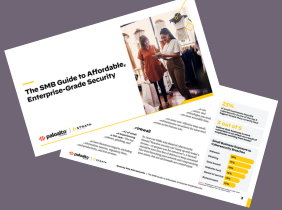
Cyber Security
While security teams draft policies, users are already uploading data

Cyber Security
The perfect storm waiting to happen inside your business

Cyber Security
How shadow IT made cyber security so much more difficult

Cyber Security
Smarter security choices that reduce complexity and improve protection

Cyber Security
Enterprise security without the enterprise barriers to entry

Cyber Security
Business moves fast; Security still owns the consequences.

Cyber Security
What happens when you can't protect what you can't see is running
Cyber Security
Every unknown application is an open invitation.

Cyber Security
Explore your next decision with confidence

Cyber Security
When new ways of working outpaced security teams

Cyber Security
Does thinking about it as the new end point change anything?

Cyber Security
Beyond the perimeter lies a smarter way to secure work