Cybersecurity breaches are no longer rare events. From small start-ups to global corporations, no organisation is immune from the risk of cyber-attacks.
When a breach occurs, the immediate focus often falls on technical containment and forensic investigation. While these actions are essential, there’s another critical component that can determine whether a business emerges with its reputation intact or suffers long-term damage: public relations (PR).
Effective PR during and after a cybersecurity breach is not simply about “spinning” the story. It’s about transparent, timely, and responsible communication with stakeholders, regulators, employees, customers, and the wider public. How an organisation manages its narrative in the hours and days following a breach can have a profound impact on trust, brand perception, and even legal outcomes.
Why PR matters as much as technical response
A cyber breach is as much a reputational crisis as it is a technical one. The technical teams may be able to patch vulnerabilities, restore services, and contain malicious actors, but without a strong PR strategy, misinformation, fear, and speculation can spiral out of control.
Several key reasons make PR indispensable in these situations:
Preserving customer trust
Customers want to know that their data and privacy are respected. If a breach occurs, silence or vague statements can make people assume the worst. A clear, honest message can reassure customers that the company is taking the matter seriously and acting in their best interest.
Regulatory and legal considerations
Many jurisdictions now have strict reporting requirements for data breaches, such as GDPR in Europe. PR teams work closely with legal advisors to ensure messaging complies with regulations while still being as transparent as possible.
Media pressure
In the wake of a breach, journalists and analysts will seek comment. If you don’t control your story, someone else will. A well-prepared PR response ensures your organisation’s perspective is represented accurately.
Internal communication
Employees are both ambassadors and information channels. If they receive inconsistent or incomplete information, rumours can spread internally and externally. Coordinated PR ensures the workforce is informed, aligned, and able to respond to customer queries confidently.
The cost of poor communication
History is full of examples where companies worsened a breach’s impact through ineffective PR. Delayed disclosures, minimising the problem, or refusing to comment can quickly erode public confidence. In some high-profile cases, mishandling communications has caused greater damage to a company’s market value than the breach itself.
For instance, organisations that have delayed acknowledging an incident often face accusations of negligence or even cover-ups. Others that issued misleading statements have been forced into public retractions, compounding the reputational harm. The lesson is clear: attempting to avoid embarrassment in the short term often leads to greater harm in the long term.
So what are the principles of effective PR during a cyber breach?
Speed with accuracy
In a crisis, every hour counts. Quick acknowledgment of the incident shows responsiveness. However, speed must be balanced with accuracy because releasing incorrect information can be more damaging than waiting a few hours to verify the facts.
Transparency without oversharing
Stakeholders deserve to know the scope, nature, and potential impact of the breach. But it’s important not to release information that could compromise ongoing investigations or security measures.
Empathy and accountability
A data breach is personal for those affected—it can lead to identity theft, financial loss, or emotional distress. PR messages should convey genuine empathy and take responsibility where appropriate, rather than relying solely on corporate or technical language.
Consistent messaging across channels
Whether through press releases, social media updates, direct emails to customers, or internal memos, all communication must tell the same story. Mixed messages can undermine credibility.
Preparedness and simulation
The best PR responses happen when they are rehearsed before they are needed. Crisis communication plans, including pre-approved holding statements and media training, allow teams to respond calmly under pressure.
The role of PR after the immediate crisis
Once the breach is contained and initial communication has gone out, PR continues to play a critical role in restoring the organisation’s reputation. This involves:
- Regular updates: Keeping stakeholders informed about the investigation’s progress, remediation measures, and new security safeguards.
- Showcasing improvements: Demonstrating lessons learned through investments in cybersecurity, staff training, and new protocols.
- Thought leadership: Sharing insights from the incident can position the company as a proactive and responsible player in the industry.
- Monitoring sentiment: Using media monitoring and social listening tools to track public perception and address ongoing concerns.
In summary
Cybersecurity breaches are high-stakes events where technical fixes alone cannot repair the damage. Public relations is a vital partner to IT, legal, and executive teams in managing the fallout. By communicating quickly, accurately, and empathetically, organisations can limit reputational damage, preserve stakeholder trust, and even emerge stronger.
Ultimately, a breach is not just a test of an organisation’s defences, it’s a test of its integrity, transparency, and leadership. Those that pass this test often do so because they recognise PR as a frontline defence, not an afterthought.
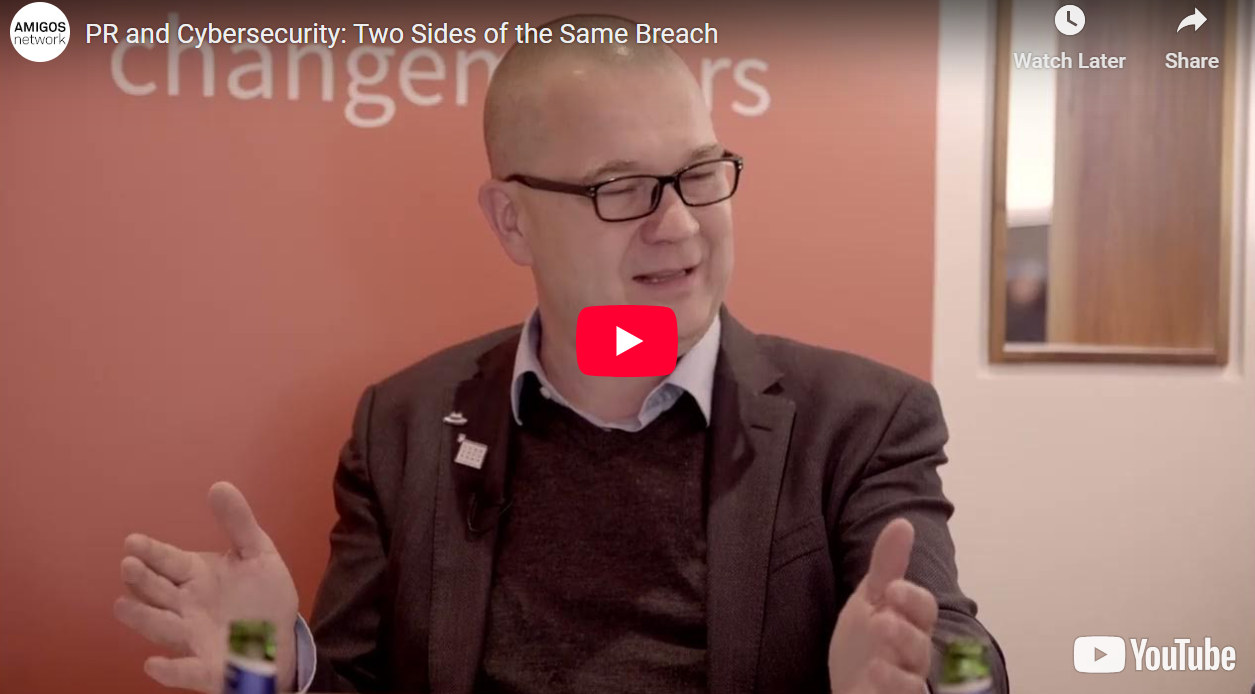
Two sides of the same cyber breach
If you’ve ever wondered how to make innovation sound interesting again, or how the UK cyber scene is evolving behind the headlines, this is two and a half minutes well spent.
More in Cyber Security

13 sponsors | 6 expert speakers | 2 days, 200+ security professionals | 2 evenings = 200+ channel partners

A proven partnership for modern security.

Optimising Security Stacks. Holding Vendors To Outcomes.

Why API protection is the foundation of AI transformation.
In-person networking and hospitality events for cybersecurity professionals and technology providers.

Security, Safety, and Trust for the AI Era.

Delivering Exceptional Experiences with a Differentiated Portfolio.

AppSec for agentic development.

Cyber resilience that keeps your business in business.

Your AI Isn’t Waiting.

AI-Native. Human-Led. United Against Every Threat.

The AI-Native Social Engineering Defense Platform.
Share this story
Reading Progress